Date: Tue, May 12, 2026 at 7:07 AM
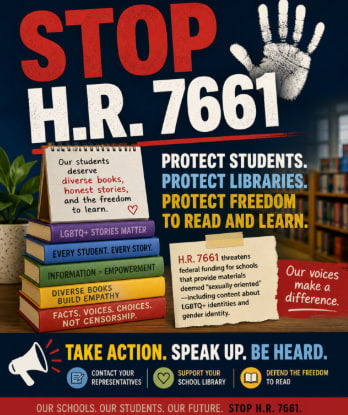
Subject: Most Educators Haven’t Heard About H.R. 7661 Yet. That’s the Problem.
To: <bajohnson@colchesterct.org>

Stay Ahead with AI in Libraries & Education – Insights, Tools, & Trends! Most Educators Haven’t Heard About H.R. 7661 Yet. That’s the Problem.This is the moment to understand it before decisions are made
A federal bill that could change what students are allowed to read and learn just moved forward. Most educators will not hear about it until it is too late.
IntroductionLast week, I got on a call with my member of Congress. Not because I had extra time. But because a bill that directly affects what students can access in schools is moving forward. With support from EveryLibrary and All4Ed, I joined a conversation about H.R. 7661, which has now moved out of committee. That detail matters more than it sounds. Because once a bill reaches this stage, it is no longer an idea. It is on a path. Why You Are Hearing About This NowMost educators hear about policy changes after they are already in place. This is one of the few moments where that is not true. When a bill moves out of committee:
This is the window where understanding matters. What H.R. 7661 Actually DoesH.R. 7661, often called the “Stop the Sexualization of Children Act,” ties federal education funding to restrictions on certain materials and content in schools. In practical terms, it would:
That last point is where the real impact sits. Because it means the bill is not only about explicit content. It reaches into areas that many educators recognize as identity, health, and representation. Why This Bill Sounds Reasonable at FirstIt is important to say this clearly. The idea of protecting children from inappropriate content is not controversial. Most people agree with it. That is why this bill resonates. Supporters see it as:
Those concerns are real. Where the Reality Gets ComplicatedThe issue is not the goal. It is how the bill defines it. Under this bill, “sexually oriented material” can include:
For many educators, those are not examples of harm. They are part of helping students understand themselves and the world around them. What This Could Look Like in a SchoolThis is where the impact becomes real. Not in headlines. In daily decisions.
No official list. No announcement. Just a steady shift in what is available. What Happens If This PassesIf H.R. 7661 becomes law, expect: Pressure tied to funding Preemptive decisions at the district level Changes to curriculum and instruction Reduced access for students This is how policy reshapes classrooms without ever naming specific titles. What Will Not Happen ImmediatelyTo stay grounded:
But those quieter changes often have the deepest impact. Why Silence Is Not Neutral HereThere is a tendency in education to stay out of policy conversations. To focus on the classroom and avoid the larger system. That approach does not work here. When a bill directly affects:
Choosing not to engage does not keep things neutral. It means decisions move forward without the people who understand the impact best. This is not about being political. It is about being responsible for the work. Why This Moment MattersH.R. 7661 has moved out of committee. Next steps may include:
This is the stage where voices still matter. Once it moves further, options narrow. What You Can Do Right NowYou do not need to figure this out alone. Start with organizations already doing this work: They provide updates, context, and ways to take action. How to Reach Your RepresentativeIf you choose to act, keep it simple and grounded.
You do not need policy language. You need your experience. You can also use this link provided by United Against Book Bans to contact your Congress person. A Script You Can UseHello, my name is [Name], and I am a [school librarian/teacher] in [city/state]. I am calling about H.R. 7661, which has moved out of committee. I work directly with students on reading and research, and I am concerned that the bill’s broad definition of “sexually oriented material” could lead schools to remove or avoid materials to protect federal funding. In practice, that could limit access to books and resources that support student learning and reflect student experiences. I ask that this bill be carefully reviewed with attention to how it will affect real classrooms and libraries. Thank you for your time. If You Are HesitatingStart smaller.
The goal is not perfection. It is participation. ClosingThis is one of those moments that will not feel urgent until later. By the time most educators hear about changes like this, they are already in place. Right now, that is not the case. You have time to understand it. You have time to speak. And in moments like this, that matters. Call to EngagementAre you following H.R. 7661 where you are? Have you had conversations about it in your school or district? Reply or comment. I am planning a follow-up that breaks down what this could look like at the classroom and library level. 📘 The AI For Educators Series Written by Elissa Malespina—now available in eBook and paperback!
You’re currently a free subscriber to The AI School Librarians Newsletter. For the full experience, upgrade your subscription. Portions of this newsletter are enhanced using AI-powered tools, with human review ensuring accuracy and quality.
© 2026 Elissa Malespina
|